











A Game About Boxes



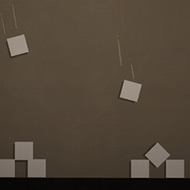
You’re standing in a bare room with a single box and a single empty square marked on the floor, and that’s genuinely all the information A Game About Boxes gives you before the first puzzle begins.
| Genre | Minimalist Logic Puzzle |
| Core Mechanic | Pushing boxes onto marked targets |
| Presentation | Abstract, no characters or story |
A Game About Boxes Has No Story, No Characters
A Game About Boxes follows a naming convention that tells you exactly what to expect: there’s no protagonist, no dialogue, no framing device explaining why boxes need to go where they go. Mechanical honesty is really the whole design philosophy — every element on screen either affects a push or doesn’t, and the game trusts that restriction to generate genuine difficulty without needing lore to dress it up.
Narrative-puzzle fans used to hint systems or story pacing tend to feel disoriented by how little hand-holding exists here. There’s no tutorial text beyond the first few levels demonstrating the push mechanic itself; everything after that is the player working out the rules through failure.
Why A Game About Boxes’ Difficulty Curve Feels So Sudden
Early levels teach one box, one target, one solution. Mid-game levels introduce boxes that block each other, positions that look solvable but aren’t once you’ve pushed a box into a corner it can’t leave. That single mistake, pushing without checking whether a box has a way back out, is the most common failure point for new players, and it’s rarely obvious until several moves later that the puzzle is already unsolvable.
Logic-puzzle veterans stop thinking box-by-box and start reading the whole grid before making a single move, treating every push as a commitment rather than a trial. That shift, from reactive to fully planned, is the actual skill the later levels are testing.
The community vocabulary that’s grown around the game is entirely mechanical too — players talk about “dead corners,” positions where a box can never be recovered once pushed there, as the thing to scan for before committing to any move. There’s no lore to argue about, no ending to debate, just a shared vocabulary for describing the same specific mistake everyone eventually makes.
What keeps players returning isn’t a story beat or a character moment, since there isn’t one — it’s the specific, quiet satisfaction of a box sliding into its marked square on the exact move you predicted three pushes earlier. A Game About Boxes never needs anything more than that to hold attention.
Comments
There are no reviews yet. Be the first one to write one.
