












Death Delivery









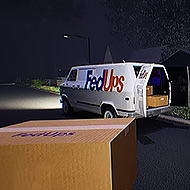
You pull up to another quiet driveway, camera in hand, ready to snap a photo of the package and move on to the next stop — and then you notice the rustling in the bushes doesn’t match anything the wind could have caused. That’s the moment Death Delivery stops being a delivery shift and starts being something you need to survive.
| Genre | Horror walking simulator |
| Core Mechanic | Deliver packages while something unseen stalks you |
| Best For | Players who prefer slow-building dread over constant jump scares |
A Normal Shift for Fed-Ups in Death Delivery
Death Delivery puts you to work for a delivery company called Fed-Ups, and the job itself is deliberately mundane at first: load packages, drive the route, confirm each drop-off with a photo, and ring the doorbell when needed. That ordinary rhythm is exactly why the shift toward horror lands as hard as it does — nothing about the job description prepares you for the stalker that starts shadowing your deliveries.
- Confirming a delivery means stopping to take a photo, which slows you down at exactly the moments you’d rather keep moving.
- Ringing doorbells announces your presence to the neighborhood, not just to the customer.
- Early deliveries are calm enough that players often don’t register the first subtle signs something is off.
How the Threat Escalates in Death Delivery
The stalker in Death Delivery doesn’t announce itself early. The first signs are subtle — footsteps that don’t match your own, bushes rustling with no wind to explain it — and it’s easy to write those off as atmosphere rather than an active threat. As deliveries continue, the presence grows more aggressive and starts appearing unexpectedly rather than staying at the edges of a street, forcing you to actually change how and when you approach a house rather than just going through the motions of the job.
What players discuss most is how that escalation forces a shift in behavior mid-shift — the same doorbell-and-photo routine that felt safe on the first few houses starts to feel like a risk once the stalker has made its presence unmistakable.
Reading the Signs Before They Read You
Because Death Delivery leans on subtle audio cues rather than obvious warnings, paying attention to sound is the real skill here. Footsteps out of sync with your own, or rustling that doesn’t match the wind, are the earliest tells that the stalker is nearby before it ever becomes visible. Players who slow down and listen tend to have more room to react than players who treat every delivery like a race to the next stop.
Frequently Asked Questions
- Does Death Delivery have combat, or is it purely about avoidance? The core loop is built around avoidance and careful movement rather than fighting back, with the delivery tasks themselves as the main objective while the stalker adds pressure around them.
- What’s the earliest sign the stalker is nearby? Sound is the first tell — footsteps that don’t match your own or rustling with no clear cause are the earliest indicators, well before the stalker becomes visible.
- Does the danger level stay the same throughout a shift? No — the presence starts subtle and becomes noticeably more aggressive as deliveries continue, so later stops in a shift carry more risk than the earlier, calmer ones.
Death Delivery gets its tension from how ordinary the Fed-Ups routine feels right up until it isn’t, and once that stalker stops staying at the edges of the street, every doorbell you ring starts to feel like a risk instead of a formality.
Comments
There are no reviews yet. Be the first one to write one.