









Tiny Bunny

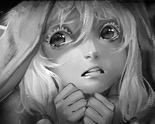
What do you actually know about the village you just moved your family into? In Tiny Bunny, the honest answer is almost nothing, and the game spends its first hours making sure that ignorance feels dangerous rather than quaint.
| Genre | Horror Visual Novel |
| Setting | Isolated Siberian village |
| Protagonist | Anton |
| Endings | 20+ |
Anton’s Village Isn’t What It Looks Like
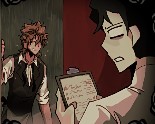
Tiny Bunny opens with Anton and his family settling into a quiet, unremarkable village tucked into the Siberian forest — the kind of place that seems boring precisely because nothing about it has been explained yet. Early in the game, before any of the horror elements announce themselves, the tension comes from small inconsistencies: a neighbor who avoids a specific topic, a path through the woods that locals won’t take after dark. Beginners who play through this section quickly, expecting a slow-burn narrative to eventually pick up pace, often miss the groundwork being laid for choices that matter dozens of scenes later.
By the time children in the village start disappearing without explanation, the forest itself feels different, less like scenery and more like something that noticed you arrive.
Four Masks, Four Very Different Children
The four masked figures Anton encounters, Alisa the fox, Teddy the bear, Hooty the owl, and Wolfy the wolf, are the game’s most memorable creation, and each one represents a genuinely distinct approach to the unfolding mystery rather than interchangeable horror-mascot filler. Alisa tends to push Anton toward confrontation. Wolfy’s presence usually signals danger has already escalated past the point of a clean exit. Learning to read which of the four is steering a given scene is one of the more subtle skills the game expects without ever stating it outright.
Mask recognition matters more than most first-time players realize — the same choice offered under Teddy’s influence can play out completely differently than the identical-looking choice offered under Hooty’s, even when the dialogue text looks nearly the same on screen.
Footprints, Notices, and What the Village Won’t Say
Missing children notices posted around the village aren’t background dressing — they’re a timeline players are expected to track themselves. Mysterious footprints appearing overnight near Anton’s house serve the same function, marking escalation without a single line of exposition explaining what made them. Lore-focused players who screenshot every notice and cross-reference dates tend to piece together the disappearance timeline several chapters before the game states it outright.
What Beginners Get Wrong About Tiny Bunny’s Choices
The most common mistake is optimizing for a single “correct” playthrough. Tiny Bunny’s branching structure doesn’t reward that instinct — some of the most narratively rich content only surfaces through choices that look, in the moment, like mistakes. Treating every decision as something to min-max against an ending guide erases most of what the story is actually doing with Anton’s growing paranoia.
How Difficulty Escalates Without a Combat System
There’s no health bar and no failure state in the traditional sense, but the game escalates pressure by narrowing your options. Early chapters give Anton room to investigate calmly; later ones force decisions under time pressure, with the forest’s activity and the masked children’s demands both increasing simultaneously. The horror scales through urgency, not through harder enemies.
The Tiny Bunny Ending Players Argue About Most
With more than twenty possible endings, community debate tends to cluster around one specific branch, the one where Anton learns the most about what the masked children actually are without necessarily surviving the knowledge. Some players consider it the “true” ending; others argue the game deliberately refuses to designate one, and that treating any single branch as canon misses the point of a story built entirely around branching consequence.
Community Vocabulary Worth Knowing
Long-time players commonly refer to a “mask run,” a playthrough deliberately structured around following one of the four children’s influence exclusively, as the fastest way to understand that character’s specific relationship to the village’s disappearances. It’s not an official game mode, just a habit the community developed to make sense of how differently the same scenes read under different influence.
What New Players Want to Know
- Do choices in Tiny Bunny affect which of the four masked children appears? Yes — earlier decisions shift which mask has more influence over a given scene, which is part of why replays with different early choices can feel like a different story.
- Is it possible to save every character by the end? No — the branching structure is built around loss being possible in most paths, and several endings depend specifically on who Anton fails to save.
- Do I need to play the episodes in order? Yes — Tiny Bunny’s five episodes build directly on choices and revelations from earlier ones, and skipping ahead removes context the later chapters assume you have.
Tiny Bunny never really explains Alisa, Teddy, Hooty, or Wolfy in plain terms, and that refusal is the point. Anton spends the entire story reading a village that won’t fully explain itself either, and by the time you understand why the forest woke up, you’ve already made the choices that decide whether that knowledge costs him anything.
Comments
There are no reviews yet. Be the first one to write one.