















Characters
Endacopia rarely sits you down and explains anyone. You piece its cast together from a boss fight here, a strange line of dialogue there, an item description you almost skipped past. This guide collects what the community has confirmed about each major figure — including the fight mechanics, the achievements tied to them, and a few things that are easy to miss on a first run.
Quick Reference
| Character | Where You Meet Them | Fight Type | Can Be Skipped? |
| Mellow | Playable throughout | — | — |
| Henry | Prologue / early game | Pattern-reading (3-move cycle) | No |
| Clocky | Prologue | Rhythm / telegraph-based | Yes (matters for Ending C) |
| The Trapezist | Misery Town | Directional blocking + thrown object | Yes |
| The Chameleon | Timesville | Full combat encounter | Yes |
| The AI | The Office | Single-target timing fight | Yes |
| The Toilet | Early puzzle door | Not a fight — a dialogue gate | — |
| The Freelance Surgeon | Late-game / secret basement | Not a fight — a lore encounter | — |
| Roger | Chapter II epilogue | Not a fight — a story choice | — |
Mellow, the Character You’re Steering

Mellow’s design — loose hands and feet, no visible mouth or eyes until you recover them, a round head under a baseball cap — isn’t just an art choice. It’s a running reminder that he starts the game genuinely defenseless: no weapon, no dialogue options of his own, no way to read the house except through what the player notices on his behalf. Everything you learn about his personality comes secondhand, through how NPCs talk about him or react to him, rather than through anything he says himself.
Henry: The Introductory Threat
Pattern-reading (3-move cycle)
Cannot be skipped

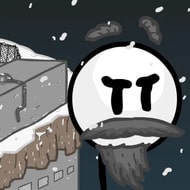
Henry is the yellow, bespectacled figure who’s usually the first thing in Endacopia to actually hurt you, and he’s the one responsible for bringing Mellow into the house in the first place — a detail the game never bothers to fully justify, which is part of what makes him unsettling rather than just goofy.
His fight runs on a repeating three-move cycle: a bite, a bat swing, and a grab-into-punch. New players tend to treat all three as equal threats and just trade hits reactively, which drags the fight out far longer than it needs to be. The actual opening is his uvula, which relocates between attacks instead of sitting still — landing hits there is what actually shortens the encounter. Henry is really a tutorial in “watch one specific detail” dressed up as a boss fight, and that habit is exactly what the later fights expect you to already have.
Clocky: The Rhythm Check
Rhythm / telegraph-based
Skippable — matters for Ending C
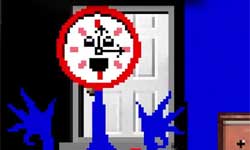
Clocky doesn’t move fast — it moves predictably, and that predictability is the whole test. The clock hands wind up visibly a couple of seconds before every strike, giving a telegraph most players catch immediately. The part that actually catches people out is the counter: stacking more than three hits inside one opening triggers a punishing retaliation, and nothing earlier in the game trains you to hold back mid-combo, so players used to going all-in tend to eat an unnecessary hit here.
Sparing Clocky instead of fighting it during the Prologue is worth flagging separately from the rest of this entry — it’s one of three prerequisites for the game’s hidden Stay ending, and it’s easy to lock yourself out of without realizing a decision made this early would matter that much later. See the endings guide for the full requirement list.
The Trapezist: Misery Town’s Puzzle-Fight Hybrid
Directional blocking + thrown object
Optional

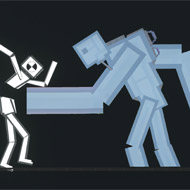
The Trapezist fight asks you to track two things simultaneously — her attack direction and the arc of an object she throws and expects back — which makes her feel noticeably busier than Henry or Clocky. Winning that fight cleanly earns the achievement Fatal Performance.
There’s a non-combat resolution too: reaching her platform and cutting the left support rope with the Scalpel before the confrontation triggers skips the fight outright and awards Cut The Act instead. Neither route is treated as the “better” one — they’re tracked as separate, equally valid outcomes, which is a pattern that repeats with every optional boss in the game.
The Chameleon: Timesville’s Quiet Horror
Full combat encounter
Optional

The Chameleon’s gimmick is more disturbing than mechanically complex once it clicks: it turns Timesville residents into puppets and fights through them rather than directly. It’s entirely optional. Defeating it in combat unlocks No Strings Attached; avoiding the fight instead unlocks Case Closed. Because the two achievements are mutually exclusive per playthrough, players chasing full completion generally save right before triggering the encounter so they can reload and get both outcomes without redoing everything that came before it.
The AI: The Fight You Can Talk Your Way Out Of
Single-target timing fight
Optional
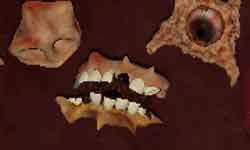
The Office’s AI runs a single-target timing fight in the same family as Clocky’s rhythm test, but it has its own dedicated workaround: bringing a filled transparent mug to the encounter disables it without a fight. Beating it in combat grants System Override; disabling it with the mug grants Short Circuit. As with the Chameleon, both are commonly farmed from a single save point rather than two separate playthroughs.
The Toilet: The House’s Strangest Gatekeeper
Dialogue gate — not a fight
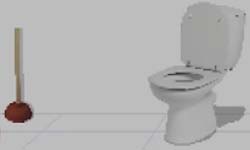
Guarding one of the earliest puzzle doors, the Toilet is less a boss than a recurring bit of dialogue you have to get past, and it’s frequently cited as the single most-quoted moment from a first playthrough. It resurfaces later, too — during the Chapter II epilogue, the item you choose to hand over in its presence (a Toy Saw or the real Saw) is what actually splits the story between Ending A and Ending B. Slow down at that exact moment; the two items look similar enough that players moving quickly sometimes commit to an ending without meaning to.
Roger: The Name Behind the Ending Split
Story choice — not a fight

Roger doesn’t get a combat encounter or an introduction scene, but the choice tied to his name — which saw gets handed over during the Chapter II epilogue — is the single decision that determines whether a playthrough closes on Escape or Return. Community lore threads tend to treat Roger as one of the more deliberately under-explained figures in the cast, on the theory that Endacopia is more interested in what you decide to give him than in who he actually is.
The Freelance Surgeon: The Lore Dump You Have to Earn
Lore encounter — not a fight
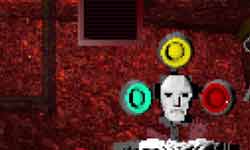
The Freelance Surgeon shows up late, in a hidden space most players don’t stumble into by accident, and functions less like a boss and more like a walking FAQ for the game’s backstory. After the Stay ending plays out, you can return to him and ask direct questions about Mellow, Henry, the three main zones, and the various bosses, and he’ll answer — making him the closest thing Endacopia has to an official lore explainer rather than something pieced together purely from item descriptions.
Regular Enemies and the Brawler Achievement
Outside the six named bosses, Timesville, Misery Town, and The Office are all populated with smaller hostile creatures that Mellow fights the same way — bare-fisted, blocking and dodging in first person. They don’t have unique mechanics worth memorizing individually, but they matter for completion: defeating fifteen of them across a playthrough unlocks A Natural Brawler, one of the achievements with a notably lower unlock rate according to Steam’s global stats, since a lot of players avoid combat where they can.
A Note on the Developer Cameo
Endacopia has one encounter that isn’t really “in” the story at all: after all three main endings have been recorded, a scene introduces the game’s creator in a yeti costume. It plays out as a short conversation with open-ended dialogue choices, and it’s less a character in the traditional sense than a wink at the audience for players who’ve already seen everything else the game has to offer. It’s covered in more depth in the endings guide, since reaching it depends entirely on ending progress rather than anything you do with this character directly.
Frequently Asked Questions
- Which boss should a new player fight first? Henry. His three-move pattern and the uvula weak point are a manageable introduction to reading an attack instead of button-mashing through it, and every later fight builds on that same instinct.
- Are any of the named bosses mandatory? Henry and Clocky are effectively unavoidable as part of the main story’s early stretch. The Trapezist, the Chameleon, and the AI are all optional, each with a fight-or-avoid pair of achievements attached.
- Can I get both the “fight” and “avoid” achievement for the same boss? Not in a single, uninterrupted run — the two outcomes are mutually exclusive per playthrough. Save immediately before triggering the Trapezist, Chameleon, or AI encounter if you want both.
- Is there a “true” villain in Endacopia? Not really — the game spreads its threats across several very different characters rather than building toward one final antagonist, and reviewers tend to point to that variety as part of what keeps the cast memorable.