
















People Playground









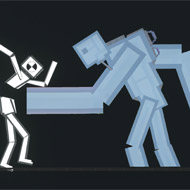
You spawn a single ragdoll into an empty map, open an inventory with dozens of tools you’ve never touched before, and nothing on screen tells you what any of it actually does — that blank-slate moment is the entire appeal of People Playground in a nutshell.
| Genre | Physics sandbox |
| Core Mechanic | Interact with ragdolls, weapons, and machines in an open testing environment |
| Best For | Players who enjoy experimentation over structured objectives |
An Open Map, a Ragdoll, and No Instructions in People Playground
People Playground doesn’t hand out missions or scored objectives. A map, a ragdoll, and a full inventory are the entire starting point, and what happens next is left completely up to whatever gets picked from the tool list. That structure is deliberate — the game is built around experimentation and simulation rather than progression through fixed levels or story beats.
The Inventory: From Firearms to Supernatural Tools
The available toolkit ranges from standard firearms and explosives through specialized medical equipment and, further along, tools with clearly supernatural effects rather than realistic ones. A ragdoll can be shot, stabbed, burned, poisoned, torn apart, vaporized, or crushed, and each method produces a visibly different physical result rather than a generic damage number.
Why Method Matters More Than Outcome
Because the end state — an incapacitated ragdoll — can be reached so many different ways, the actual interest in People Playground comes from how a given method plays out physically, not just whether it “worked.” Burning behaves differently from tearing, which behaves differently from a vaporizing tool, and seeing those distinct physical reactions is most of the draw.
Wiring Objects Together With Cables
Beyond direct weapons, People Playground lets players connect objects using wires and cables to conduct electricity between them, opening up setups where one triggered device sets off another. Electrical conductors, melting and burning effects, and basic liquid dynamics all interact with these wired setups, which is where a lot of the more elaborate community-made scenarios come from.
- Wired setups let one triggered object cause a chain of effects rather than a single isolated action.
- Liquid and fire effects both interact with wired electrical setups in ways that can compound quickly.
- Simple two-object wiring is usually the easiest starting point before attempting anything more elaborate.
Time Control Changes How You Observe Destruction
Slow motion and pausing are built directly into People Playground, and they matter more than they might sound like on paper. A lot of what makes a given interaction interesting happens too fast to fully process at normal speed, so slowing time down — or pausing entirely to inspect a mid-explosion frame — is a core part of how players actually engage with the physics rather than an optional extra.
Machines and Environmental Hazards
- Mechanical systems can be placed and triggered independently of direct player action.
- Environmental hazards react to force, fire, and electricity the same way placed objects do.
- Combining machines with wired triggers is where the most elaborate community setups tend to originate.
Mods: Characters, Weapons, Maps, and Vehicles
People Playground’s toolset is extended significantly by community mods, which add new character types, weapons, maps, and vehicles beyond what ships with the base game. This is part of why the game keeps finding new attention years after release — the base sandbox stays the same, but what gets placed inside it keeps expanding.
What New Players Get Wrong
The most common mistake is trying to force a specific outcome instead of letting an experiment play out. People Playground rewards curiosity about how two tools interact more than it rewards planning a single “best” setup in advance — a lot of the game’s appeal comes directly from results nobody actually predicted going in.
Frequently Asked Questions
Is there any goal or win condition in People Playground?
No — the game is built entirely around open experimentation rather than fixed objectives, so there’s no scored win condition to work toward.
Do I need mods to get the full experience?
Mods add extra characters, weapons, maps, and vehicles, but the base toolkit — including wiring, time control, and the full range of interaction methods — already provides a complete sandbox on its own.
What’s the best way to learn what a tool actually does?
Testing it directly on a ragdoll in slow motion is usually more informative than reading a short in-game description, since a lot of People Playground’s tools produce effects that are easier to understand by watching than by reading about.
People Playground never tells you what to build toward, and that’s exactly the point — between the wired machines, the slow-motion inspection, and an inventory built for every method of destruction imaginable, the only real limit left is how long you’re willing to keep experimenting.
Comments
There are no reviews yet. Be the first one to write one.