










Zoonomaly

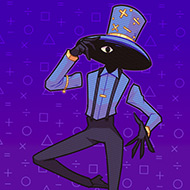




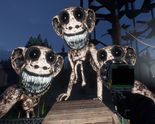
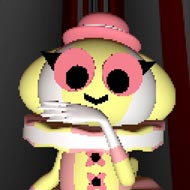
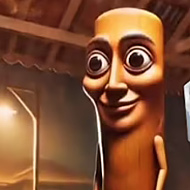
What happens when a zoo’s most harmless animals stop being harmless? Zoonomaly answers that by hybridizing familiar creatures — cats, bears, giraffes — into smiling, unkillable mutations, then daring you to walk past them anyway.
A Zoo That Turned Against Its Visitors in Zoonomaly
Zoonomaly drops you into an abandoned zoo overrun by mutated creatures, tasking you with figuring out what caused the takeover while working your way toward the key shards needed to actually finish exploring the grounds. The zoo itself is open and nonlinear, so nothing forces a single fixed route through it — enclosures can be approached in whatever order makes sense once you’ve scoped out what each one holds.
Puzzles Inside the Enclosures in Zoonomaly
- Each enclosure hides its own self-contained puzzle tied to that specific animal exhibit.
- Solving an enclosure’s puzzle is what actually produces a key shard, rather than shards being scattered as simple pickups.
- Because the zoo is nonlinear, an enclosure that seems too difficult early on can usually be set aside for later without blocking overall progress.
Why You Can’t Just Fight Back
The mutant animals wandering the grounds cannot be killed, which reframes the entire game around avoidance rather than confrontation. Zoonomaly leans on stealth, observation, and distraction instead of combat, and treating any encounter like a fight to win is a fast way to end a run early. Reading a creature’s patrol pattern and staying out of its path matters far more than any kind of direct engagement.
The Bloom O’Bang and Reading the Aura
Your main tool against pursuit is the Bloom O’Bang, a deterrent capable of stopping a chasing creature and revealing an invisible aura spectrum around threats that isn’t normally visible. Learning to read that aura before a mutant is even in plain sight is one of the more useful skills the game rewards, since it turns a blind guess into an informed decision about which direction is actually safe.
What New Players Get Wrong
The most common mistake is treating early enclosures like they’re meant to be rushed. Zoonomaly’s puzzles reward observation of the specific exhibit’s layout and details, and moving too fast usually means missing the exact clue a puzzle depends on. A second mistake is engaging a creature directly out of panic — since none of them can be killed, that instinct almost never pays off compared to simply repositioning and waiting it out.
Can any of the mutated animals actually be defeated?
No — none of Zoonomaly’s creatures can be killed, and every encounter is built around avoidance, distraction, or use of the Bloom O’Bang rather than direct confrontation.
Do I need to explore the zoo in a specific order?
No — the zoo is nonlinear, and enclosures can be tackled in whatever order suits a given playthrough, which also means a particularly tricky enclosure can be left for later.
What does the Bloom O’Bang actually do besides stopping pursuit?
Beyond halting a chasing creature, it reveals an aura spectrum around threats that isn’t visible otherwise, which makes it useful for reading danger before a mutant is even directly in view.
Zoonomaly gets its unease from a simple substitution — take a place built for harmless animals, mutate what lives there, and refuse to let the player fight back — and once the Bloom O’Bang becomes second nature, navigating that zoo stops being about survival instinct and starts being about actually reading the space.
Comments
There are no reviews yet. Be the first one to write one.