
















BONELAB











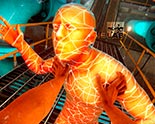
BONELAB looks like it should play the same way once you’ve learned how your body moves — until you swap avatars and realize a taller, heavier body reaches differently, swings differently, and even climbs a ladder at a completely different pace than the one you just got used to.
A Body the Game Actually Simulates in BONELAB
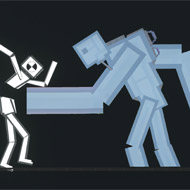
The physics driving BONELAB govern everything from how a punch actually connects to how an improvised barricade holds together, using a fully simulated physical body rather than a fixed camera with disconnected hands. Every action — climbing, mantling, grabbing a ledge — runs through that same physics foundation, which means nothing about movement feels scripted or animation-locked.
Avatar Swapping Changes More Than Looks in BONELAB
The defining mechanic of BONELAB is switching between avatars, and it isn’t cosmetic. Each avatar carries its own set of attributes — height, mass, agility, speed, upper and lower strength, vitality, and intelligence — meaning a smaller, more agile avatar handles completely differently from a larger, stronger one. Certain puzzles and challenges are built specifically around needing a particular avatar’s attributes to progress, tying character choice directly into the game’s problem-solving rather than leaving it as pure customization.
Why Body Remapping Matters for Avatar Swapping
Because avatars can differ wildly in size and proportion from a player’s actual body, a remapping system keeps movement realistic even when an avatar’s shape doesn’t match the player directly, preventing limbs from clipping through themselves during otherwise ordinary movement. That technical detail is a big part of why swapping avatars in BONELAB feels physically consistent instead of janky.
Weapons and Combat Built on Manual Handling
- Firearms require manually racking slides and managing recoil rather than relying on automated animations.
- Melee weapons swing based on actual arm motion, not a scripted attack animation.
- Physics-based improvised tools sit alongside dedicated weapons as legitimate combat options.
What New Players Get Wrong
The most common mistake is expecting combat and movement mechanics to carry over identically after switching avatars. Because attributes like strength and agility genuinely change from one avatar to the next, a combat approach that worked perfectly on one body can fall apart on another, and adapting rather than forcing the same playstyle across every avatar tends to matter more than raw skill.
Do I need to master every avatar, or can I stick with one?
Certain puzzles and challenges specifically require attributes only some avatars have, so relying on a single favorite avatar throughout BONELAB eventually runs into content that demands switching.
Does weapon handling work the same across every avatar?
Not exactly — since strength and agility attributes differ by avatar, the same weapon can feel noticeably heavier or more manageable depending on which body is currently in use.
Is the body remapping system something players need to configure manually?
No — it works automatically to keep movement realistic across differently proportioned avatars, so players don’t need to adjust anything themselves when switching.
BONELAB never lets a player settle into one comfortable way of moving through the world — between avatar-specific attributes, manually handled weapons, and puzzles built around a particular body’s strengths, relearning how to exist in your own simulated skin is most of what the game is actually testing.
Comments
There are no reviews yet. Be the first one to write one.