
















A Game About Digging A Hole











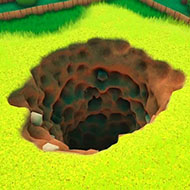
A Game About Digging A Hole sounds like exactly what the title promises, but it doesn’t play like a simple clicker for long — what starts as tapping a shovel into dirt turns into managing battery life, bag space, and a genuine tunnel network before the first few upgrades are even bought.
Buying a House, Digging for a Reason in A Game About Digging A Hole
The setup is almost absurdly simple: you buy a house after seeing an ad promising buried treasure somewhere in the backyard, and the entire rest of the game is spent finding out whether that ad was telling the truth. A Game About Digging A Hole doesn’t dress this premise up with much dialogue or cutscenes — the digging itself is left to explain what kind of game this actually is.
Battery and Bag Space Are the Real Limits in A Game About Digging A Hole
Every trip underground is bounded by two resources that run out regardless of how much treasure is nearby: battery charge and inventory space. Running low on either forces a trip back to the surface to sell what’s been found, and managing that round trip efficiently is the actual skill the early game is built around, more so than digging speed itself.
- Battery drains steadily just from being underground, not only from active digging.
- Inventory fills up fast once ore veins are found, often before the battery does.
- Selling ore on the surface is what funds every upgrade that makes the next trip easier.
From Shovel to Full Mining Operation
Money earned from selling ore goes toward upgrading the shovel, the battery pack, and available bag space, and eventually toward tools that change the whole shape of a run — explosives for clearing terrain faster, and a jetpack for moving through the hole in ways a shovel alone never allowed. The game’s loop deliberately shifts from a simple clicker feel early on into something closer to a small-scale mining operation once those upgrades stack up.
Why the Hole Keeps Getting More Interesting
What keeps A Game About Digging A Hole from feeling repetitive is that upgrades change the actual texture of digging, not just the numbers behind it. A late-game jetpack run through tunnels carved out by explosives feels nothing like the earliest, slow shovel-only digging — same core loop, completely different pace.
An Ending Found, Not Announced
There is a story buried beneath all the digging, delivered through signs and small details left behind rather than through any dialogue or narration. It suggests something, or someone, deliberately left useful things down there for whoever eventually dug deep enough to find them. Reaching that ending doesn’t stop the game, either — digging and exploring further afterward is entirely optional but available.
What New Players Get Wrong
The most common early mistake is digging as deep as possible on a single trip instead of managing battery and bag space carefully. A Game About Digging A Hole rewards shorter, well-timed trips that come back with a full inventory over long, ambitious dives that end with an empty-handed climb back to the surface once the battery dies.
Frequently Asked Questions
- Is there a story, or is it purely a digging simulator? There’s a story hidden underground, delivered through signs rather than cutscenes, and reaching it is one of the game’s actual goals rather than an afterthought.
- What should I upgrade first — the shovel or the battery? Battery and bag space tend to matter earlier since they directly limit how much a single trip can accomplish, though shovel upgrades speed up how quickly ore can be extracted once found.
- Does the game end once the underground story is found? No — A Game About Digging A Hole lets you keep digging and exploring after the story is uncovered, so reaching that point doesn’t lock off further play.
A Game About Digging A Hole earns its title honestly, but the trip from a slow first shovel swing to a jetpack-assisted dive past your own explosive-cleared tunnels is where the game actually convinces you the premise was never as simple as it sounded.
Comments
There are no reviews yet. Be the first one to write one.